
Livestock building ventilation and a healthy microclimate.
Heat, humidity, draughts and air leaks do not show up all at once - first animal comfort falls, then feed intake, and finally herd performance. Effective natural air exchange in a livestock building is today most often achieved with open side walls fitted with roll-up curtains, combined with a good-quality ridge vent. A weather station that regulates the microclimate in the building automatically also pays off.
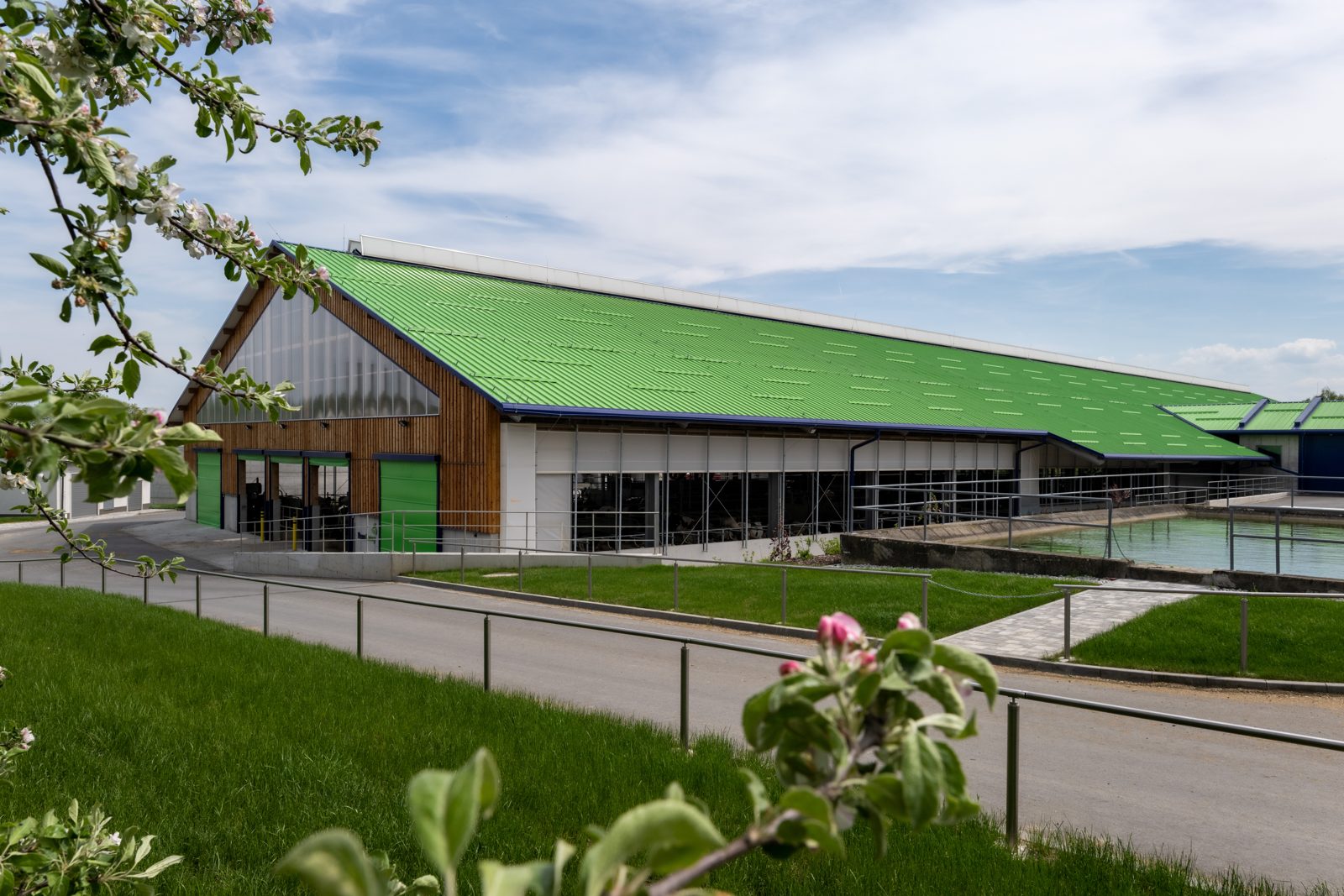
The microclimate determines herd health and performance.
Any shortcoming in the quality of the housing environment significantly increases the risk of disease (e.g. respiratory disease) and has a negative effect on a number of physiological processes closely linked to performance and reproduction.
Heat counts before the building gets hot
In dairy cows heat stress begins at around 20-22 °C. The cows then eat less and milk yield falls. Ventilation removes heat and moisture without creating a draught on the animals.
The thermoneutral zone of cows
Within this temperature range, with other conditions constant, a cow expends only a negligible amount of energy on maintaining its physiological functions. In calves the zone lies between +10 and +25 °C.
In winter it is mainly about moisture
Even a closed livestock building has to be ventilated in winter. It removes moisture, dust and gases and protects the structure against condensation, without blowing directly on the animals.
More in our article: Animal welfare - the well-being of animals in livestock buildings
Air in at the sides, out at the ridge.
Side walls bring the air in, the ridge vent lets it out, and a weather station can control both automatically.
- 1
Side walls bring in fresh air
A side ventilation system allows the supply of fresh air to be adjusted steplessly by opening the side wall of the livestock building partly or fully.
- 2
The ridge vent removes heat and moisture
Ridge vents provide natural extraction of warm air and moisture from the space under the roof and at the same time bring daylight into the livestock building.
- 3
The weather station controls the opening according to the weather
It monitors the weather and automatically controls the ventilation of the whole building according to wind, precipitation and temperature - with different settings for the windward and the leeward side.
Combined with ridge ventilation, the side ventilation system creates the conditions for effective natural ventilation and ensures sufficient air exchange all year round.
Four parts of one system.

Side ventilation systems
Roll-up, roller and polycarbonate walls in six types, A to F. Operated by a winch or an electric drive; the electric version can be linked to the HAZE weather station.
- Types
- A to F
- Size
- length up to 100 m, height up to 6 m (D+)
- Operation
- winch or electric
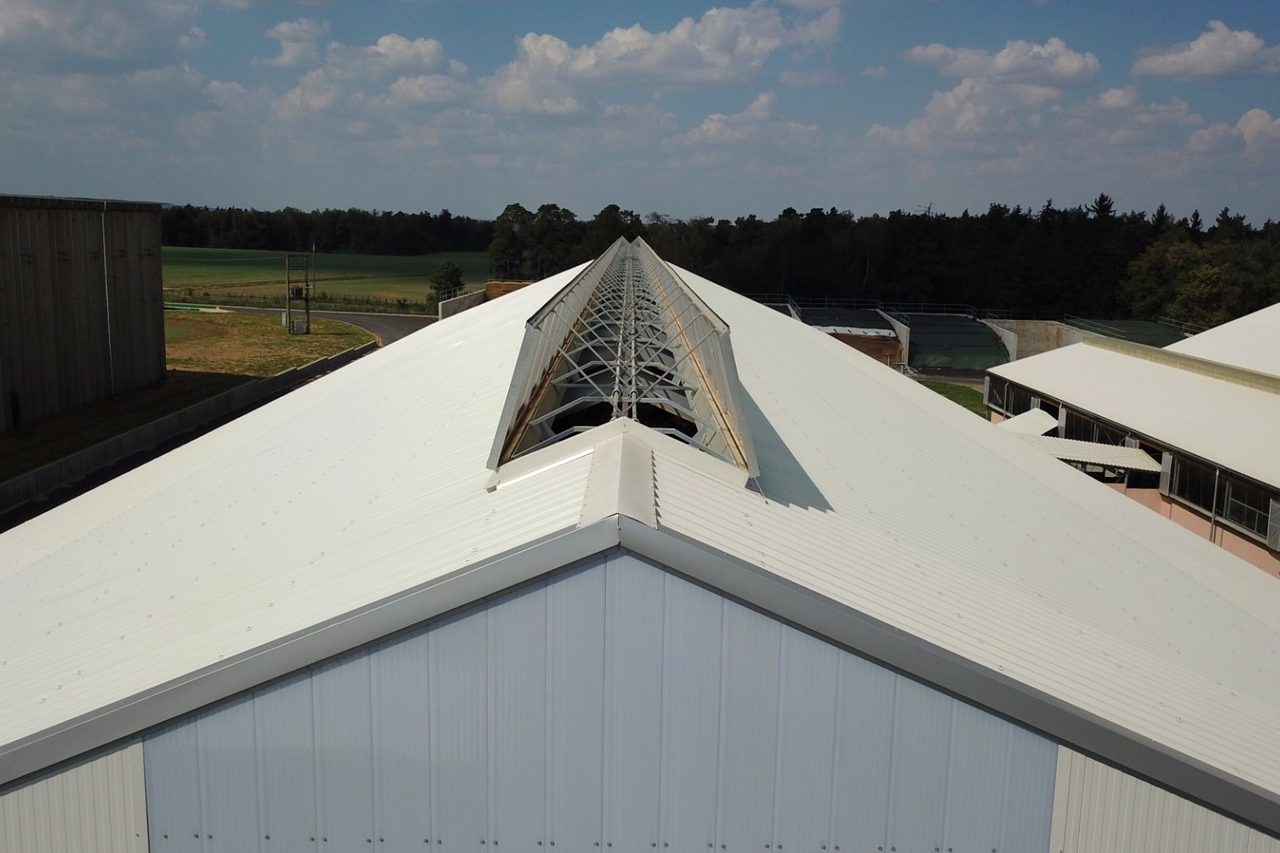
Ridge vents
Electrically operated double-leaf vents with stepless adjustment of the opening, or static vents in GRP or polycarbonate that stay permanently open.
- Width
- 0.4 to 4.5 m
- Length
- up to 140 m (double-leaf, curtain infill)
- Plus
- daylight
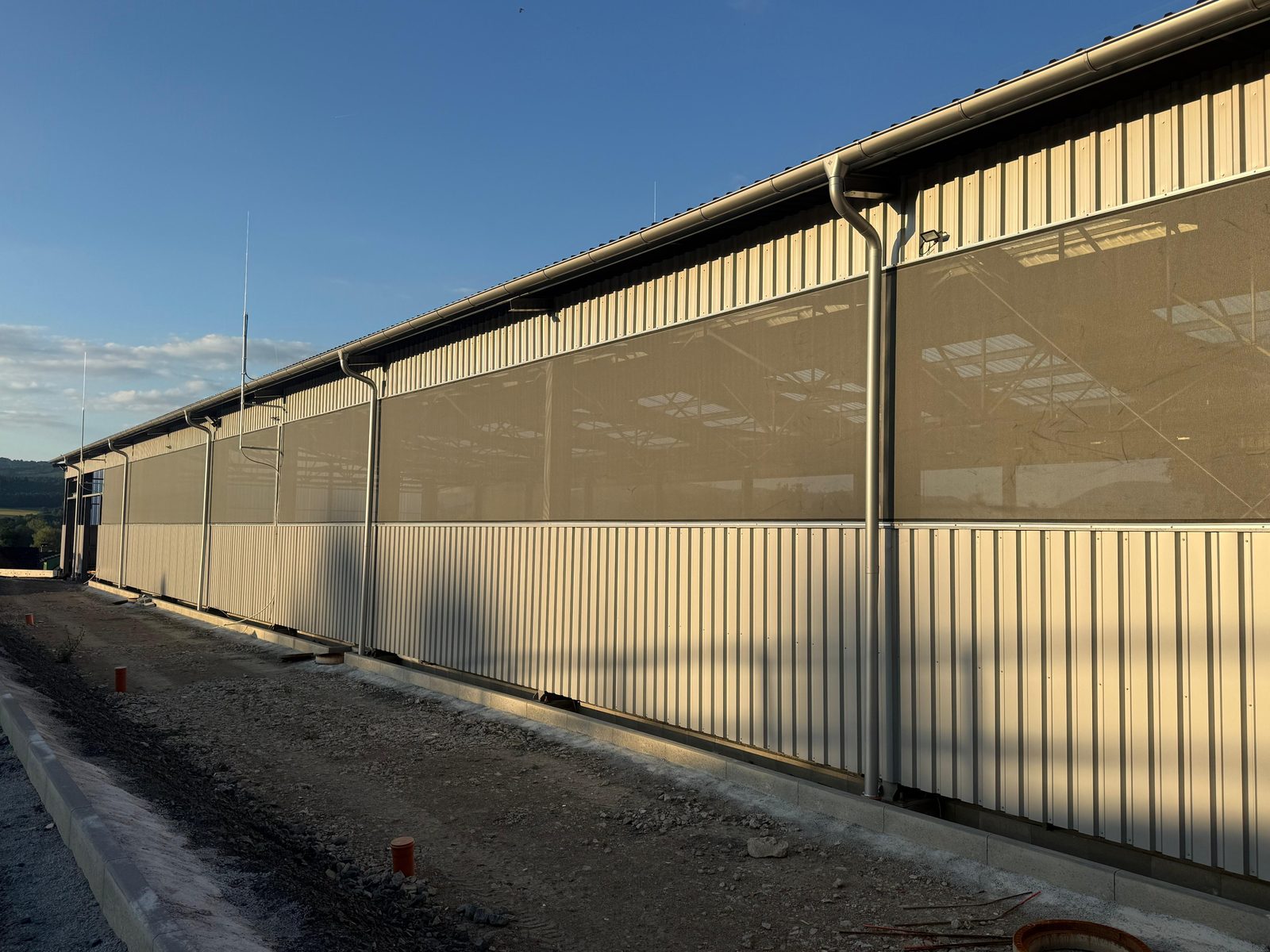
Nets
Ventilation nets form the breathable infill of side ventilation systems and cover the wall areas of the livestock building. The SCRIM anti-draught net protects against direct draughts.
- Variants
- SCRIM, H08, H25
- Rolls
- 2 x 35 m to 3 x 100 m
- Application
- sides, gables, windows

AG-06 weather station
It regulates the whole building automatically according to wind, precipitation and temperature - both the ridge vents and the side ventilation systems. On request it can also be connected to the lighting, the manure scrapers or the fans.
- Sensors
- wind, precipitation, temperature
- Modes
- summer, winter + frost function
- Display
- touchscreen
Different settings in summer and in winter.
Remove heat before heat stress sets in
In general, the heat stress threshold in cows is reached at roughly the point where the air temperature exceeds 21 °C. Heat stress is usually a combination of temperature and relative humidity.
- Open side walls and the ridge vent provide natural air exchange.
- If fans are connected, the weather station switches them on when required, based on its temperature sensors.
- In summer, type D roller curtain walls can be set so that the cubicles along the perimeter walls do not overheat.
Protect the building against frost and humidity
Cows cope with cold more easily than with heat - they produce metabolic heat in the rumen. In winter the problems are more often water and equipment freezing and, in buildings with minimal air exchange, high humidity and condensation.
- Winter mode partly closes the curtains, by one third or two thirds, according to the set temperature.
- The frost function closes the curtains completely and prevents the feed and the drinkers in the building from freezing.
- The curtains still respond to wind speed limits being exceeded and to precipitation.
Ventilation in our projects.
 Ridge + side ventilation
ZD Unčovice - Příkazy site
A ridge vent with a GRP arch and electric BVS D+ roller curtain walls up to 4.5 metres high in the calf barn.
Project details → Ventilation + weather station
Vadín farm
Six type D side ventilation systems connected to a weather station in a building for 600 dairy cows.
Project details →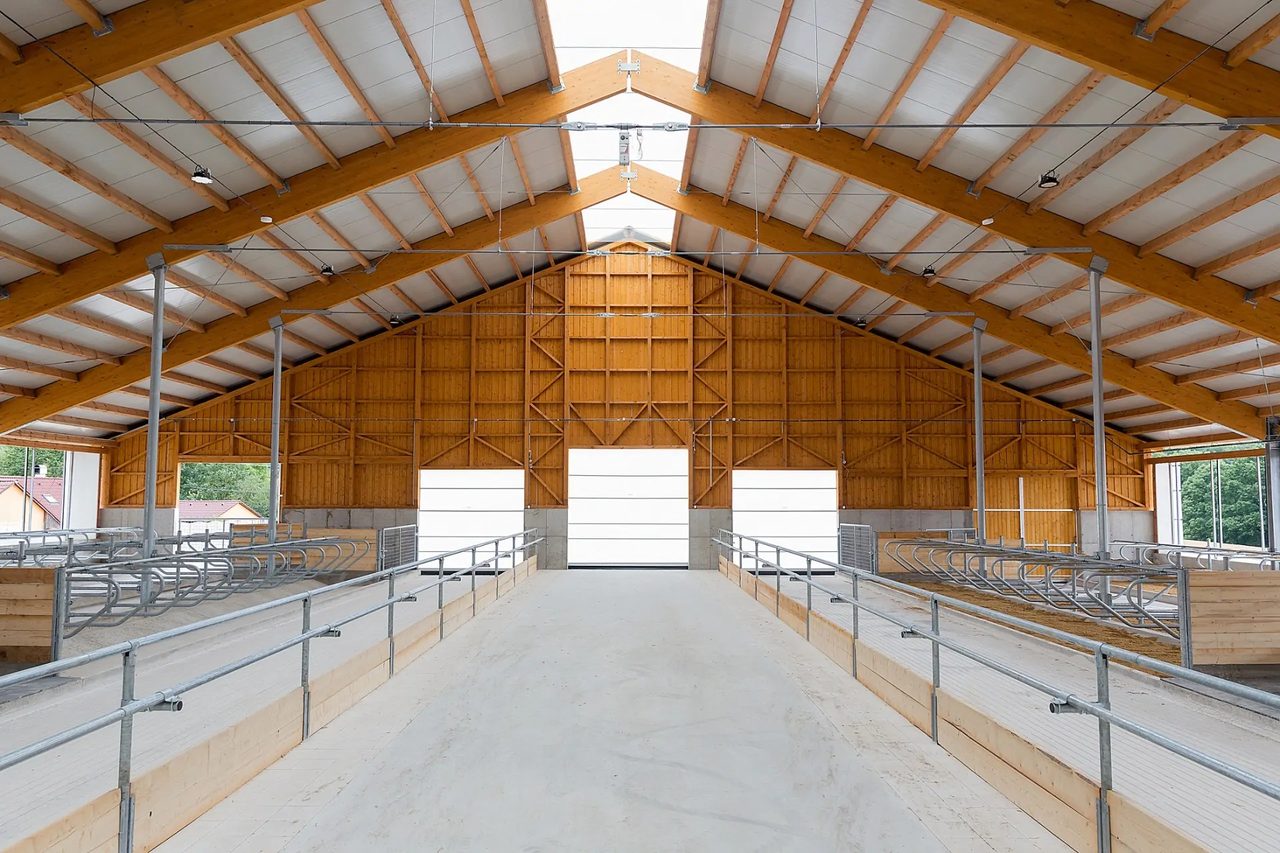 Ventilation + gates + weather station
Okrouhlá Radouň farm
A type B side ventilation system connected to the weather station, plus a non-adjustable ridge vent.
Project details →Fill in the form and we will get back to you by the next working day.
What you ask most often.
How is the side wall operated?
By a manual winch (by hand) or by an electric drive. The electric types can be connected to a HAZE weather station and the wall then controlled automatically according to temperature and wind.
What is the difference between an adjustable ridge vent and one without a damper?
The adjustable double-leaf ridge vent can be opened and closed steplessly by an electric drive and linked to the weather station, so it responds to the weather. Arches without a damper cannot be closed - they provide permanent ventilation and daylight in the livestock building, and they have a simpler structure and a lower price.
Should I choose GRP or polycarbonate?
GRP is the least expensive option but it insulates less well. Polycarbonate holds heat better, has high light transmission and prevents the livestock building from overheating. We offer both variants for the arches without a damper; for the adjustable double-leaf ridge vent you choose between curtain and polycarbonate.
What can the weather station control?
The AG-06 is designed for automatic control of the whole livestock building - both the ridge vents and the side ventilation systems. At the customer's request it can also be connected to the lighting, the manure scrapers or the fans.
Can the weather station be added to our existing ventilation?
Yes, we will assess a suitable connection according to the specific ventilation version and the electrical installation.
Do you supply nets with the ventilation installation as well?
Yes. The nets are part of our side ventilation systems and ridge vents, and we supply them together with the structure and the installation. They can also be ordered separately.